⭐ See content on my other sites here

Understanding the New Testament Gospel Differences (Part 8)

Understanding the New Testament Gospel Differences (Part 8 --- Accompanying signs)
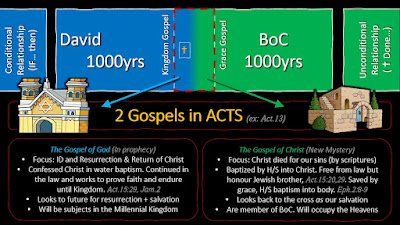


We continue with the comparison of the gospel of God and the gospel of Christ by looking at key elements that distinguish them from each other. I recommend to start at the beginning of this comparison to gain the necessary context of this series of posts.

The Kingdom gospel and the gospel of God had accompanying signs

The earthly ministry of Jesus was validated by a myriad of signs (or miracles) that He performed. These signs, according to prophecy, were to validate His ministry and prove to the Jews that He was their Messiah. To confirm this, John ends his gospel with a remarkable statement;

John 21:24-25 This is the disciple which testifieth of these things, and wrote these things: and we know that his testimony is true. 25 And there are also many other things which Jesus did, the which, if they should be written every one, I suppose that even the world itself could not contain the books that should be written. Amen.


Understanding the New Testament Gospel Differences (Part 7)

Understanding the New Testament Gospel Differences (Part 7 --- The meaning of Christ's death was unknown)


We continue with the comparison of the gospel of God and the gospel of Christ by looking at key elements that distinguish them from each other. I recommend to start at the beginning of this comparison to gain the necessary context of this series of posts.

The meaning of Christ's death was unknown during the Gospels and early Acts

During Jesus early ministry, His followers did not know that the purpose of His first advent was to sacrifice Himself. According to their prophetic scriptures, Jews believed that when their Messiah would come, He would come as a King and a conqueror. 

Eternal Life or Eternal Death - Man's Choice

Eternal Life or Eternal Death – Man's Choice

Article written by Arthur J Licursi (on his website here)


The "gospel of Christ" is the most glorious offering our creator God could make unto lost mankind.

"For I [Paul] am not ashamed of the Gospel of Christ: for it [Paul's "gospel of the grace of God" for this age] is The Power of God unto Salvation to every one that BELIEVETH…" (Romans 1:16 (KJV))

The one caveat in the above verse is to "BELIEVE," trusting in Christ, as the Sole Basis of One's Salvation. This means all men are free to Choose Salvation unto eternal life or, alternatively, they may reject Christ… unto "everlasting destruction."

Understanding the New Testament Gospel Differences (Part 6)

Understanding the New Testament Gospel Differences (Part 6 --- Call upon the name of the Lord or confess His name)


We continue with the comparison of the gospel of God and the gospel of Christ by looking at key elements that distinguish them from each other. I recommend to start at the beginning of this comparison to gain the necessary context of this series of posts.

Call upon the name of the Lord or Confess the Lord

In the Old Testament and the four Gospels, it was required by Jews to call upon the name of the Lord or confess His name. The purpose for this was to make a positive identification of Him based on the signs the scriptures gave about their Messiah, and in so doing individually proclaim their faith in Him. To call upon the name of the Lord, or to confess Him as their Messiah, was a necessary requirement of salvation during the law dispensation and in the Kingdom gospel and the gospel of God.

Understanding the New Testament Gospel Differences (Part 5)

Understanding the New Testament Gospel Differences (Part 5 --- A Future Salvation, Endurance and Being Overcomers)


We continue with the comparison of the gospel of God and the gospel of Christ by looking at key elements that distinguish them from each other. I recommend to start at the beginning of this comparison to gain the necessary context of this series of posts.

Salvation was Future

A simple fact that does not need much proof is that in the gospel of the Kingdom, and the gospel of God, the hope of salvation lay out in the future. This of course is very different to the gospel of Christ (or the Grace gospel), where salvation is not a hope out in the future based on one's works and the conditional requirement to endure to the end, but rather an immediate, factual, and unconditional sealing of one's salvation by the Holy Spirit because of the cross work of Christ.

Understanding the New Testament Gospel Differences (Part 4)

Understanding the New Testament Gospel Differences (Part 4 --- Righteous Works)


We continue with the comparison of the gospel of God and the gospel of Christ by looking at key elements that distinguish them from each other. I recommend to start at the beginning of this comparison to gain the necessary context of this series of posts.

Righteous works

Because the gospel of God was based on works, you will naturally see this works requirement manifest in the lives and actions of those who committed to, and were saved, under this gospel in the Acts period. For a Jew who believed in the gospel of God, that Jesus was risen and was the Christ, their works program did not change at all. They simply continued their routines based on the requirements of the Kingdom gospel, so there is not much we can learn from their accounts. However, by looking at examples from the saved Gentiles in this time, and what they did, we can glean an understanding that the gospel of God certainly had works unto salvation, as opposed to the gospel of Christ where we do not see this evidence.

Understanding the New Testament Gospel Differences (Part 3)

Understanding the New Testament Gospel Differences (Part 3 --- By the Scriptures)


In this post we continue with the comparison of the gospel of God and the gospel of Christ. I recommend to start at the beginning of this comparison to gain the necessary context of this series of posts.

By the scriptures vs. Unsearchable 

The gospel of God is the Kingdom gospel with the addition of one HUGE event; the resurrection of Jesus Christ. This gospel, preached by Peter in Acts 2, reignited the hope that the King could come and bring a restoration to Israel through His Kingdom. This narrative had been prophesied centuries before and many aspects of Jesus birth, life, death and resurrection can be found in the scriptures as proof of His identity and purpose.

The BIG Picture (Shorts)

The BIG Picture (Q&A)